
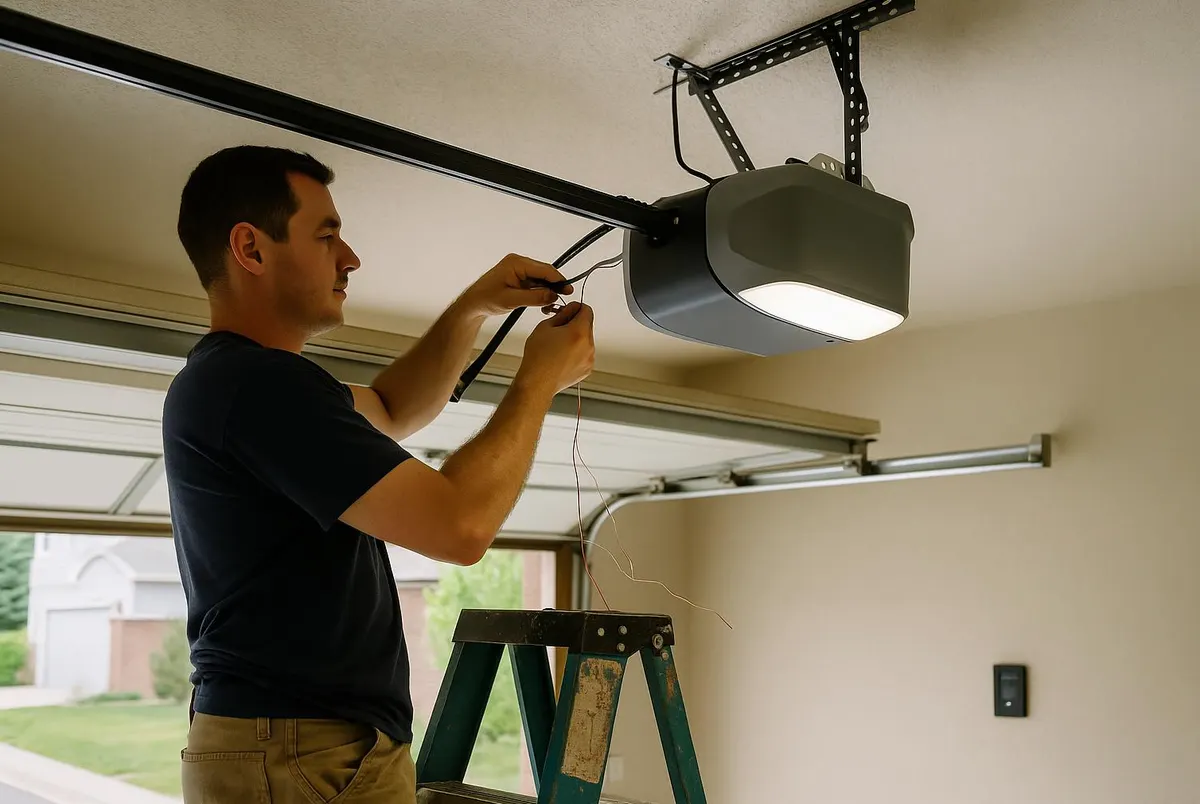
What a Technician Sees on a Typical Call
The call usually starts the same way: one spouse thinks it's "just a little rust, no big deal," and the other is convinced the door is about to fall apart. When a technician pulls into the driveway, here's what's actually there most of the time: orange-brown streaking along the bottom 12 to 18 inches of a steel door, a slightly bubbled or flaking patch near the corner, and sometimes a wood door with a swollen bottom rail that no longer sits flush against the weatherstrip. Nine times out of ten, both people are a little bit right.
Why This Happens Here
San Antonio doesn't get constant rain like the Gulf Coast, but it gets the worst combination for garage doors: long stretches of heat and humidity, followed by sudden severe storms that dump water fast and blow it sideways with wind. That water gets forced under the bottom seal, into panel seams, and around hardware that's lost its coating. Add dust and grit from dry spells that work into scratches and give rust something to grab onto, and you've got a door that's constantly cycling between wet and dry.
A few specific culprits show up again and again:
- Sprinkler overspray hitting the bottom panel daily, which is a slower but steady moisture source than storms.
- Poor drainage or grading at the driveway apron, so water pools against the door instead of running away from it.
- Condensation inside a hot, humid garage, especially if the garage is attached to an air-conditioned house and the door becomes the coldest surface in the room.
- Scratched or chipped paint from hail, lawn equipment, or everyday bumps that exposes bare steel to moisture.
Steel Doors: Surface Rust vs. Structural Rust
This is where the argument usually lives. Surface rust is a cosmetic problem. It's the orange discoloration you can rub off with a cloth, or light pitting in the paint that hasn't gone through the metal. It's ugly, but it's not dangerous, and it's genuinely a "live with it for now" situation if you're not bothered by the look.
Structural rust is different. If you can flex the bottom panel with hand pressure, if there are soft spots you can push a finger through, or if rust has worked all the way through and you can see daylight or flaking metal on both sides of the panel, that's not cosmetic anymore. The bottom panel takes the most abuse because it's closest to ground moisture, road spray, and standing water, so it's almost always the first place structural rust shows up.
How to Tell the Difference in Five Minutes
- Press firmly on the rusted area with your thumb. Surface rust won't move. Structural rust often feels spongy or gives slightly.
- Scrape lightly with a plastic card. If it's just surface oxidation, you'll see solid metal underneath. If it flakes away in layers, moisture has been working for a while.
- Check the opposite side of the panel from inside the garage. Rust-through will usually show on both faces.
Wood Doors: Swelling Is the Real Enemy
For wood or wood-composite doors, rust isn't the issue—swelling is. Wood absorbs moisture during humid stretches and storms, swells, and then shrinks again as it dries out in San Antonio's heat. Do that enough times and the wood stays permanently swollen, warps, or starts separating at the joints. A door that used to close flush but now drags on the track, or won't seal tightly at the bottom, is often telling you the wood has taken on water it never fully released.
Unlike surface rust on steel, wood swelling rarely reverses itself. Once the fibers have expanded and the finish has cracked, repainting or resealing slows further damage but doesn't undo what's already happened.
What Actually Fixes It (and What Doesn't)
For light surface rust on steel: sand it down to bare metal, treat with a rust-inhibiting primer, and repaint with an exterior-grade enamel. This is a legitimate DIY weekend project and will hold up for years if you catch it early.
For rust-through, soft panels, or heavily warped wood sections: patching looks fine for a few months and then fails again, because the underlying material is already compromised. At that point you're choosing between replacing the single damaged panel (if the door is sectional and panels are still available) or replacing the full door.
For ongoing moisture exposure: fixing the cause matters as much as fixing the damage. Redirecting a sprinkler head, adding a small drainage slope at the apron, or improving airflow in the garage will do more long-term good than any amount of touch-up paint.
When to Call San Antonio Garage Door Service
If you're not sure whether what you're looking at is cosmetic or structural, that's exactly the kind of call worth making before buying paint or panels. We can assess whether a damaged panel can be replaced on its own or whether the storm, hail, and moisture cycles common here have taken enough of a toll that full Garage Door Installation makes more sense. We also handle Garage Door Maintenance & Tune-Up visits that catch early rust and seal problems before they turn into a panel replacement.
If rust or swelling has you and your spouse going back and forth, let us settle it. Call San Antonio Garage Door Service today and we'll give you a straight answer—no upsell, no surprise fees.