
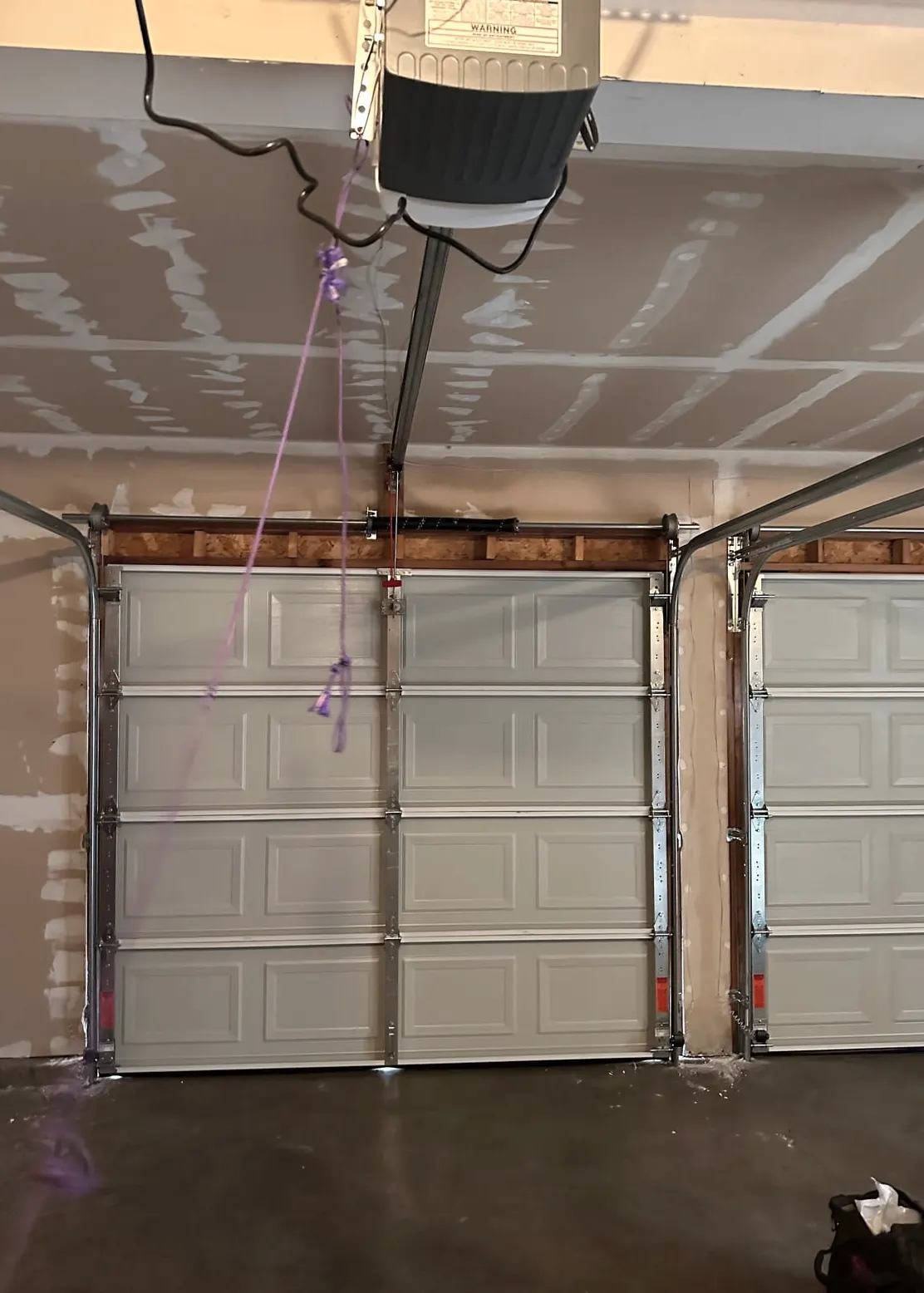
The Moment You Notice It
The power flickers off during a fast-moving storm, the kind that rolls in off US-281 with no warning. You hit the opener button out of habit. Nothing. Your car is parked inside, you're already late, and that's when you see it — the red cord dangling from a track near the top of the door, swaying slightly from the ceiling fan you also can't turn off. You've seen it a hundred times and never touched it. Today you need to.
What the Cord Actually Does
That red cord is the manual release for your garage door opener. It connects to a small lever on the trolley, the part that rides along the opener's rail and pulls the door up and down. Pulling the cord disconnects the trolley from the drive mechanism, so the door is no longer locked to the opener. Once disconnected, you can lift or lower the door by hand, the same way garage doors worked before electric openers existed.
It exists for exactly the moment described above: a power outage, a dead opener motor, or a opener that's jammed and won't respond. It's also used by movers and installers who need to raise or lower a door without power at all.
When Pulling It Helps
- Power outage with the door already down. Pull the cord, lift the door manually to get your car out, then lower it and leave it disconnected until power returns.
- Opener motor burned out or unresponsive. If the motor won't engage at all, releasing the trolley lets you operate the door as a manual door temporarily.
- You're moving the door for maintenance or inspection and want to check the springs or track without the opener fighting you.
When Pulling It Makes Things Worse
The cord is simple, but the door behind it isn't. A few situations turn a quick fix into a real hazard:
- A broken or weakened spring. Springs do the heavy lifting on a garage door — the opener just guides it. If a spring is broken or fatigued (common after a long hot San Antonio summer of expansion and contraction), disconnecting the trolley leaves nothing to support the door's full weight. It can drop suddenly, fast enough to injure someone standing underneath or damage whatever is in its path.
- Pulling the cord while the door is moving. This can cause the door to fall freely from wherever it was in its travel, especially dangerous if it was most of the way up.
- A door that's already off-track or binding. If the door has been sticking, scraping, or hanging unevenly, something structural may already be wrong. Disconnecting it can let one side drop faster than the other, twisting panels or popping rollers out of the track.
- High wind during a storm. If you're releasing the door to get a car out mid-storm, a manually operated door with no opener resistance can catch wind and slam, especially on exposed garages that take the brunt of sudden gusts.
The Actions That Prevent Problems
- Before pulling the cord, look at the door's current position. Only release it when the door is fully closed or fully open and stationary, never mid-travel.
- Test the spring tension first if you can. A door that's properly balanced should stay roughly in place when lifted about halfway. If it crashes down or shoots up, don't disconnect it manually — the spring is likely compromised, and that's a job for a technician.
- Lift and lower slowly, using both hands, and never let go once the trolley is disconnected until the door is fully resting on the ground.
- Reconnect the trolley correctly once power is restored — pull the cord toward the door (not straight down) to re-engage it, then test with the opener before trusting it fully.
- If the door won't move smoothly by hand, stop. Forcing it can bend track or snap cables under load.
When to Call San Antonio Garage Door Service
If pulling the cord reveals a door that's unbalanced, a spring that looks snapped or stretched, or a trolley that won't reconnect cleanly, that's beyond a DIY fix. Our team handles spring replacement and garage door opener repair & installation across San Antonio, Schertz, Converse, Live Oak, Selma, Universal City, New Braunfels, and Boerne — and we'll check the whole system, not just the symptom you noticed.
If your garage door has left you standing in the driveway during a storm, call San Antonio Garage Door Service today. We show up on time, diagnose it straight, and get your door working safely again.